Catherine Mermet
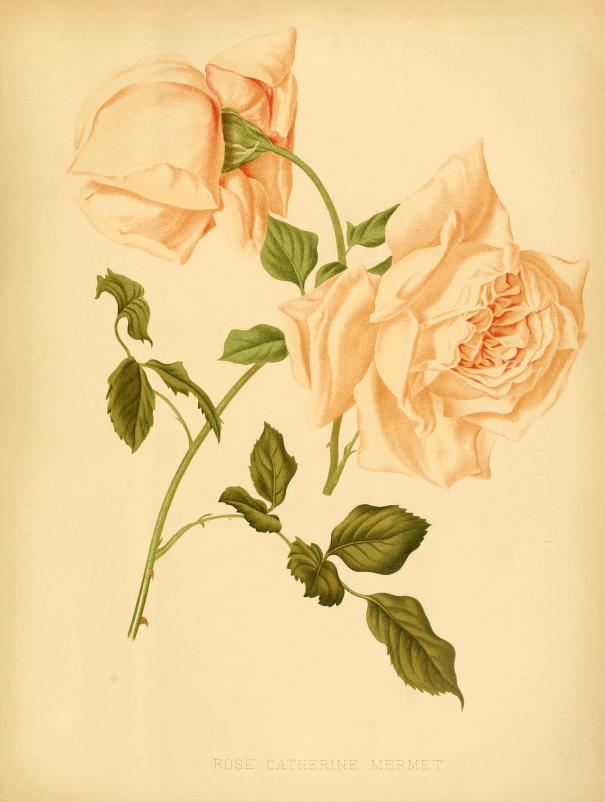 Rycina pochodzi z angielskiego tygodnika ogrodniczego The Garden .
Herbatnia
Hodowca – Guillot – syn, rok1869
Synonimy -
Kwiaty- klasycznej budowy w ciepłym, pełnym wdzięku różowo liliowym kolorze, centrum kwiatu nieco ciemniejsze. Oczywiście jak to u herbatnich, stabilność koloru nie jest cnotą i spotkamy się z różnym nasyceniem koloru podstawowego w zależności od pory roku , temperatury czy stanowiska. Kwiaty średnicy 10 -12 cm, złożone z 40 – 80 jedwabistej tekstury płatków o odgiętych na zewnątrz brzegach, rozwijają się z długich, eleganckiej budowy pąków, które to są dodatkową , autonomiczną ozdobą tej odmiany. Nie zawsze pąki są tak dekoracyjne, czasem pojawiają się bardziej pękate a wówczas rozwijają się z nich bardziej płaskie, mocno wypełnione kwiaty.Oczywiście ma również wady. Taką jest krótka trwałość jej kwiatów. W dziewiętnastowiecznych szklarniach uprawiano tą odmianę tysiącami, gdyż wszystkich chwytał za serce jej ciepły różowy kolor, nic więc dziwnego, że popyt na nią utrzymywał się przez długie lata. Właśnie ta masowość produkcji spowodowała, że wyselekcjonowano od niej około 10 sportów. Szerzej piszę o tym poniżej.
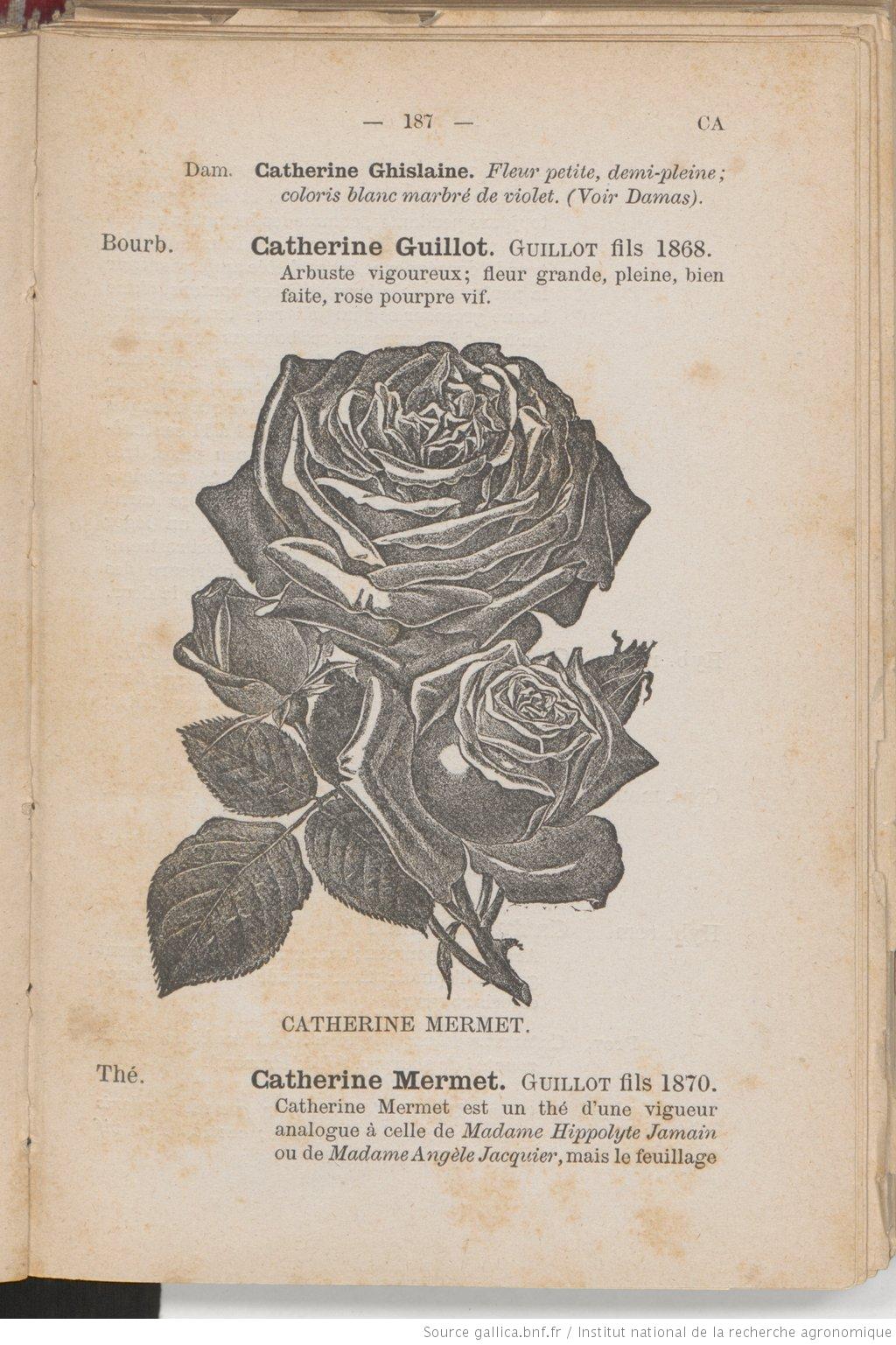 Rycina pochodzi z obszernego wydawnictwa z roku Dictionaire des roses Maxa Singera z roku 1885 .
Zapach – słodki, intensywny – początkowo herbatni potem u starszych kwiatów pojawia się nuta fiołków.
Krzew – jest to luźnej budowy krzew lub mały klimber dorastający do 2 m wysokości. Ma tendencję do ulegania mączniakowi prawdziwemu.
Liście -młode, brązowo czerwone, potem ciemno zielone, matowe – gęsto rozmieszczone na pędach.
Pochodzenie – nie znamy jej rodziców,choć są wyraźne sugestie co do jej bliskiego pokrewieństwa z odmianą Adam. Wiemy natomiast, że wydała kilka interesujących mutacji- The Bride zwaną również White Mermet Johna May’a z New Jersey z roku 1885 a która miała wiele przewag na odmiana wyjściową, że wspomnę o lepszej formie kwiatu, Dalej Bridesmaid Franka Moore z Texasu rok 1893, której kolor powszechnie był uważany za lepszy niż odmiany wyjściowej. Również Muriel Graham zwana też Yellow Marmet A. Dicksona z roku 1898 , Mme Joseph Laperiere, rok 1899 , Maid of Honour, wydała też sport czerwony o dziwnej nieco nazwie Waban i wiele jeszcze innych. Jednakże z tego całego klanu Catherine Mermet, poza nią tylko jeszcze The Bride pozostała na rynku obecna.
TEA ROSE CATHERINE MERMET.
WITH AN ILLUSTRATION.
jN a recent election of Eoses, Catherine Mermet —a figure of which, is given
on the accompanying plate—was placed by a large majority of electors
amongst the best twelve Eoses known ; and that it is one of the very finest
varieties we have, there can be no sort of doubt. Probably, if all the good
qualities it possesses are taken into consideration, it will be acknowleged to be
the best of all the Teas. It is large, of the finest form, constant, and floriferous.
As a pot plant it is a good healthy grower, and makes sufficiently strong though,
not large wood. Probably it would be a more robust grower in the open, budded
on the briar, which suits most Teas better than any other stock. Though the
blooms vary more or less in depth of colour, the prevailing tint is flesh-coloured
rose, with a dash of yellowish-buff, but this tint is not generally so deep as it
appears in the illustration. On the whole, Catherine Mermet is, as the catalogues
say, a u superb ” Eose, and ought to be in the most choice collection.
There have been several fine additions to the tea-scented section within the
last two or three years. The cream of these are probably comprised in the fol¬
lowing:— Amcizone, Anna Ollivier , Catherine Mermet , Cheshunt Hybrid, Duchess of
Edinburgh , Madame Berat’d, Madame Camille , and Madame Francois Janin.
Amazon does not seem to be much known, but it is a good and distinct flower, with
a long pointed bud, which opens well, and is fine bright clear yellow in colour. It
is a good healthy grower as a pot rose, and flowers freely. Anna Ollivier is a first-
rate flower, of good size ; the petals are creamy-white, their base deep rose ; it
is most distinct and pleasing, and is a healthy grower. Cheshunt Hybrid
and Duchess of Edinburgh are dark red Teas; the first has the better form,
the Duchess is rather brighter in colour, but both are good and valuable
additions to the Tea section. Madame Berard may be shortly described
as an improved Gloire de Dijon, which is not saying a little in her favour.
Madame Camille is sometimes extremely fine, but it is a somewhat uncer¬
tain variety. If it could be always depended on, it would run Catherine Mermet
very close.
Perhaps one of the most distinct new Tea Eoses we have had for some time
is Madame F. Janin , a small rose indeed, but most beautiful. In colour it is deep
orange-yellow, inclined to coppery ; in habit it is robust and healthy, and it is
most floriferous. As a button-hole rose it is facile princeps. —E. B. Postans